Saturday, August 3, 2013

Catching Up on Prepping Activity

Cooking fresh-caught fluke on my rocket stove
Although I haven't posted in a while, it doesn't mean I haven't been prepping. In the past few months I've built up a good three-month supply of food, honed my vacuum sealing skills, learned how to pressure can -- and water bath can as well -- tripled my garden space (with plans to double it size again next year), added to my personal firearms arsenal, and probably have done a whole lot more that I can't remember at the moment.

I've tried to use each day to do a little prepping/survival-based living, which includes gaining knowledge too. A lot of that centers around gardening at the moment if for no other reason than it's starting to become that productive part of the growing season so I'm hip deep in vegetables.

Particularly satisfying has been my cucumber production which has turned into quite a few pints (and a few quarters) of pickles. I started off small this year in the hard, as I always do, with a single 4'x4' plot in which I follow Mel Bartholomew's Square Foot Gardening method. I'm a long-time adherent to that organic gardening style, from way back in the 1980's when he had a PBS television show. Whenever I've had a garden, I've gardened the SFG way.

Sometime after planting that square I came across some YouTube videos from a prepper named LDSPrepper who was advocating a different gardening style called the Mittleider Gardening Method. In many respects there are similarities to SFG such a intensive planting, vertical growing of vining crops, etc. But there are significant differences too, perhaps the most important of which was the use of commercial fertilizers.

The basic argument of the MGM system is that it doesn't matter to plants where the nutrients come from, they're all absorbed in the same manner: they first need to be broken down into a water soluble form so they can be taken up by the roots. MGM says the commercial fertilizers are minerals that are simply mined and packaged so in essence it could be considered "organic."

While I'm not sold yet on that explanation -- though I've seen some university studies that say essentially the same thing -- after watching LDSPrepper's videos and seeing the fairly amazing results he achieved I thought I'd give it a test run. Now my test wouldn't be 100% MGM because the method calls for 18" wide beds 30' long and building some imposing structures to go along with it for the vertical gardening portion of it, it would be a close enough replica in every other way.

This is when I tripled my garden size, expanding from a single '4x4' plot to three 4'x4' plots. I determined one of the new plots would be grown in a fully MGM style and the other would be completely SFG. I made up equal batches of a variant of what's called "Mels' Mix" for the soil, since it's fairly close to the growing medium the MGM method suggests and consists of equal portions of peat moss, vermiculite, and sand. To the SFG plot, however, I also added compost to align more with the SFG way. Both are essentially looking for an inert growing medium, but the addition of compost helps build up the quality of the medium while also adding nutrients.

I got plants from a local nursery since it was so late in the growing season (it was mid-May by then) and duplicated the plantings in each. So if the first two squares in the MGM plot were planted with tomatoes, so were the first two squares in the new SFG plot.

Almost from the beginning you could see the difference. The MGM plot took off while the SFG plot, while healthy looking, grew more slowly. Unfortunately, both plots were hit by groundhogs at different times and each one suffered some severe setbacks. Whether a complete accounting of the two methods can be clearly made is doubtful at this point, but it seems clear from a productivity standpoint the MGM method is the winner.

The photo at right shows the comparison of the two plots side-by-side, with the MGM plot on the left. You can see how much bigger the MGM plants are compared to the SFG side.

I've harvested about 30 pounds of cucumbers to date, 25 of which came from the MGM plot. I've harvested another 5 pounds or so of eggplants from the MGM square, but none yet from SFG. However, when it comes to peppers, I've gotten  or 4 from the SFG side, and while the MGM plant is incredibly tall and lush with foliage, it hasn't produced any fruit yet.

Interestingly, I've gotten a few tomatoes off of plants on both sides but the ones from the MGM plot have all suffered from blossom end rot; the SFG ones have been healthy and without problems. Since they both receive identical amounts of watering I'm not sure what the cause of the one is.

And while the MGM plot has been productive, particularly for dukes, I have to say the SFG plot seems more full and rich, even if it's working more slowly than its rival.

As I said I'm not sure if I'm convinced about the MGM method because of its reliance upon commercial fertilizers. I'm way too indoctrinated on the use of organic gardening methods for too long to give up those practices, and because my composting is an enjoyable sideline (that's a story for another day), I can't see me not continuing to garden this way in the future.

Now part of the MGM way is to purchase 2 small bags worth of nutrients from the MGM foundation that don't come in any fertilizer bag. At $15 it's a small fee and they're supposed to last you for two years if used on a typical 18"x30' bed. So since I'll probably only use up half a bag this year, I'll continued my testing of the method next year when my garden doubles in size to six 4'x4' beds! Once it runs out, though, I foresee me reverting back to traditional organic gardening methods.

Sunday, March 10, 2013

In the Can

Didn't get to do much actual prepping today, but I did prepare to prep. I picked up a copy of Better Homes & Garden's "You Can Can" book on canning. I think I've got the vacuum canning down, but I really don't know how to do pressure canning.

On one of Jack Spirko's episodes of The Survival Podcast he mentions it's important to learn some basic food prep skills like cooking and canning. I took it to heart and picked up the book today. I can already actually cook the food -- I'm pretty good at that -- but the food prep part: the saving, canning, etc. of it needs some work. So I've got my eye on a pressure canner and a hot water canner at Walmart and I plan on picking both up tomorrow.

Separately I want to get a Dutch oven too. Jack also mentioned it's a good idea to learn how to use one in a campfire setting -- and doing so now while you can rather than later when you have to -- that I plan on getting one of them too. I spent upwards of two hours today looking at YouTube videos of various stoves and ovens and I'm looking forward to trying out all these new methods of food prep as I enhance my various life skills.

Saturday, March 9, 2013

Labeling Jars

I like when things look neat and orderly, though if you were to look at my workshop you'd probably laugh at that notion. Okay, I like the idea of being organized even if I'm not always good on the follow through.

But to help my prepping efforts from getting out of hand and to keep it all looking good, after vacuum canning a few more jars of dried beans (and beef jerky!) I decided to label the jars with the design I posted yesterday. I also wrote up instructions on how to prepare the various items so that a year, two, or five down the road if it comes down to it, I won't have to rely on my memory to remember where I need to soak the beans or not.

I then affixed the item labels to the front of the jars using packing tape to completely cover them to provide a level of protection from moisture and affixed the instructions to the back using the same method. I figure if I do it each time after canning an item, it will prevent it from becoming an overwhelming task while keeping everything looking nice and neat.

I also planted some peas in the garden under my cold frame that protected the soil from the few inches of snow that fell yesterday. The soil was still warm and crumbly, which made it an easy task to pop the seeds into the soil.

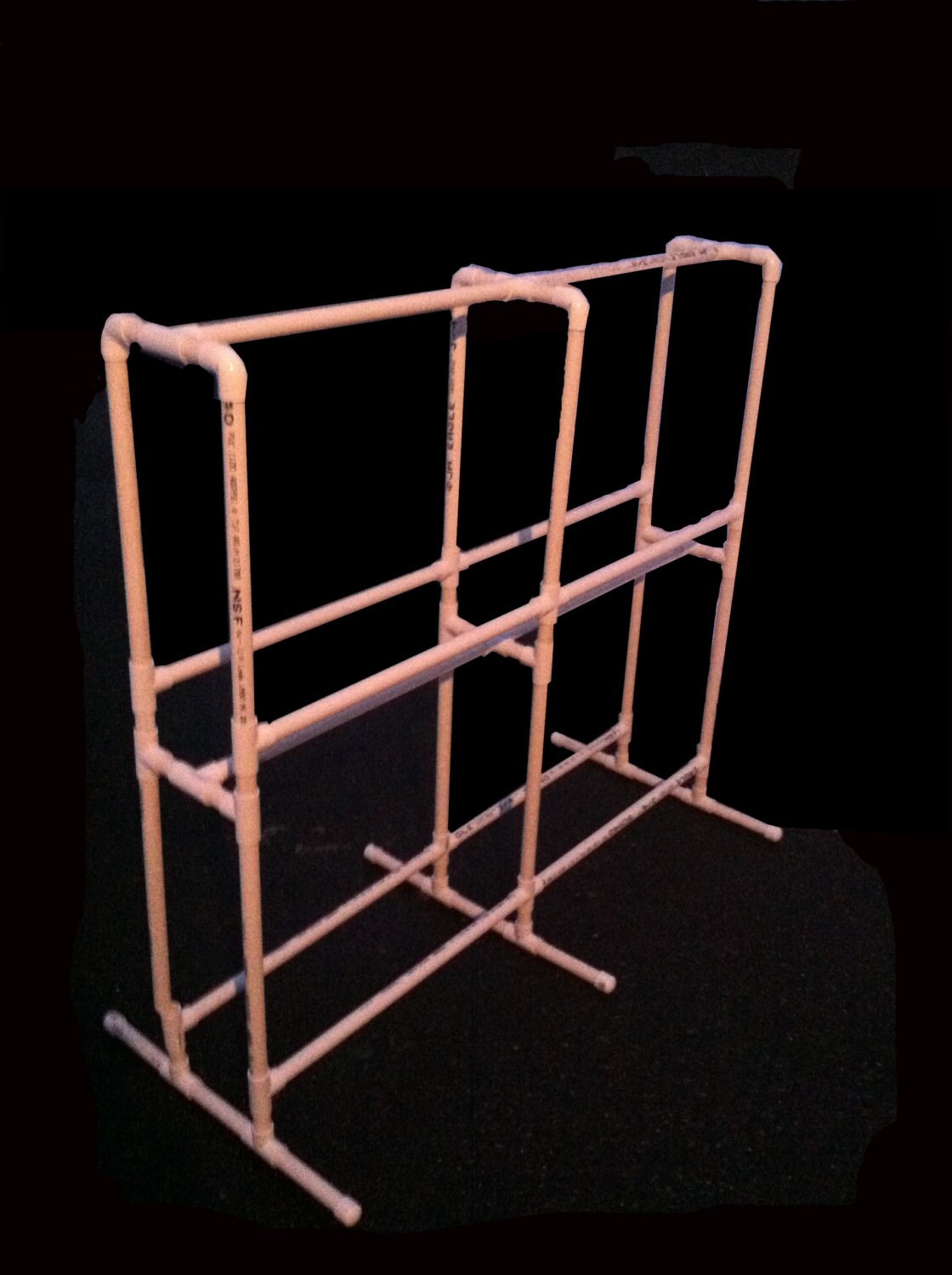
Last I made wood shelves for my PVC gro-light system. It allows me to start my seedlings indoors under fluorescent lights helping me to extend the growing season, but also makes the process, yes, neat and orderly!

Friday, March 8, 2013

Operating in a Vacuum

After cleaning out more food storage containers, I vacuum sealed some split peas and lentils I purchased earlier in the day when I went to Walmart and also bought a dozen quart jars for packaging the dry goods. I found that I could fit 2 one pound bags (just) into one whereas the other day I was only able to fit 1-1/2 bags of regular peas into a jar that I had on hand. Lentils were almost but not quite two bags.

But I've also been researching the best methods of food storage too. While Mylar bags are considered to be the gold standard of food storage, I want to know why they were. Why couldn't a 6 mil. plastic bag be just as good?

It seems it's for several reasons. One, the opaqueness of the Mylar helps prevent degradation. That much makes sense, but also their thickness and the way they're constructed helped prevent the loss of of the vacuum created by the addition of oxygen absorbers and also the prevention of bugs from gaining access to the supplies.

Somehow I think a 6 mil. bag would also prevent infestation, but there is something to be said for the opacity of the bags. Then again, I plan on storing them inside a plastic container so no light will be penetrating the space anyway.

The other thing I researched was oxygen absorbers. The how and why of them. What you find as soon as you start trying to research "Mylar" or "oxygen absorbers" is that preppers dominate -- absolutely dominate! -- the search results. It's hard to find information unrelated to prepping to get an objective answer.

Could be there isn't one. Mylar and oxygen absorbers are the end all, be all of food storage, but still IO'd prefer to have an objective opinion as to why. All too often we simply get, "this is how you do it!" Which really isn't ll that satisfactory.

So it seems hand warmers are similarly designed as oxygen absorbers -- but everyone basically says don't! without say why "don't" -- and I briefly considered using them anyway, until I realized that Prime members on Amazon can get a whole bunch of them for cheap. Far cheaper than hand warmers. Like less than $7 for 100 cheap! Since there's no real savings going nontraditional routes, I'll pass on being more exotic in protecting my valuables. So scrubbing out some buckets, getting my preps together and vacuum sealing some beans and lentils was the order of the day.

I also had fun designing a label for my jars. No reason to do so other than I wanted to. Of course, also listened to The Survival Podcast for my daily does of prepping news.

Thursday, March 7, 2013

Burn, Baby, Burn!

Using a magnesium fire starter I picked up at Harbor Freight Tools, I started a fire in my fireplace this evening. It's snowing and raining outside so it was a good time to practice this skill once again.

Typically when I've started fires I've fed a ton of newspaper into the grate trying to get the kindling sitting on the andirons lit before adding logs. The newspaper naturally creates a lot of ash. However, since beginning to learn prepping skills, I've begun practicing using my magnesium fire starter figuring it's best to learn now when all is good before having to light a fire when the SHTF.

And by doing so I end up using much less fuel to get my fires started. Thus far I've used several different methods of getting the fire going: using a cotton ball that the magnesium filings have been scraped onto and a small (very small) pile of shredded newspaper. I have a number of small twigs ready to put onto the fire and slowly build them up until I start putting larger twigs on the andirons and they catch. Last the seasoned wood goes on.

And voila! I get a fire like that pictured. As I've used this method for fire starting many times now, it's time to try a new method so that I can build up a repertoire of fire starting skills.

And I've cleaned out a few more of my food storage buckets and tomorrow I plan to seek out some storage bags to start putting away the food.

Tuesday, March 5, 2013

Food Storage: Buckets and Jars

I'll be using this blog to document my prepper/survival progress, whether it's a new skill, something stored, something learned, etc.

Today, for example, I picked up about a half dozen square containers, about 3-4 gallons in size, to use for storage. I got them from a local bakery which just throws them out after use. Since they're food grade containers it's just a matter of cleaning them out, sanitizing them, and preparing them for the foods I plan to use them for.

The problem is, they've contained eggs or batter, which gets really gross after left standing for a bit. So it takes a bit of scrubbing and washing and bleaching to get them to the condition I'd feel comfortable using them. Now I just need to get bags to put the food stuffs into first.

The other things I did today was vacuum sealed two jars of dried green peas. Not exciting, I know, but I used a brake bleeder valve to create the vacuum. It's not as quick as a Foodsaver, but it's cheaper and gets the job accomplished, creating a vacuum of 20+ millibars or whatever the appropriate term is.

I got the bleeder valve from Harbor Freight Tools for $25 and the wide mouth Foodsaver lid attachment off Amazon.com for around $10 (I got a regular mouth lid attachment as well). Using the tube that comes with the bleeder valve, I attached it to the tube from the lid attachment. I put the peas into the jar, placed the lid on top, and covered it with the lid attachment. Then I began squeezing! About 20 or so squeezes later, the gauge read 20+ mb and a seal was achieved!

I'll need to get more jars -- and more food -- but I'm happy with the ability to have a low cost, non-electric means of vacuum sealing food.